Sunday, April 20, 2014

Feminism versus Miley Cyrus

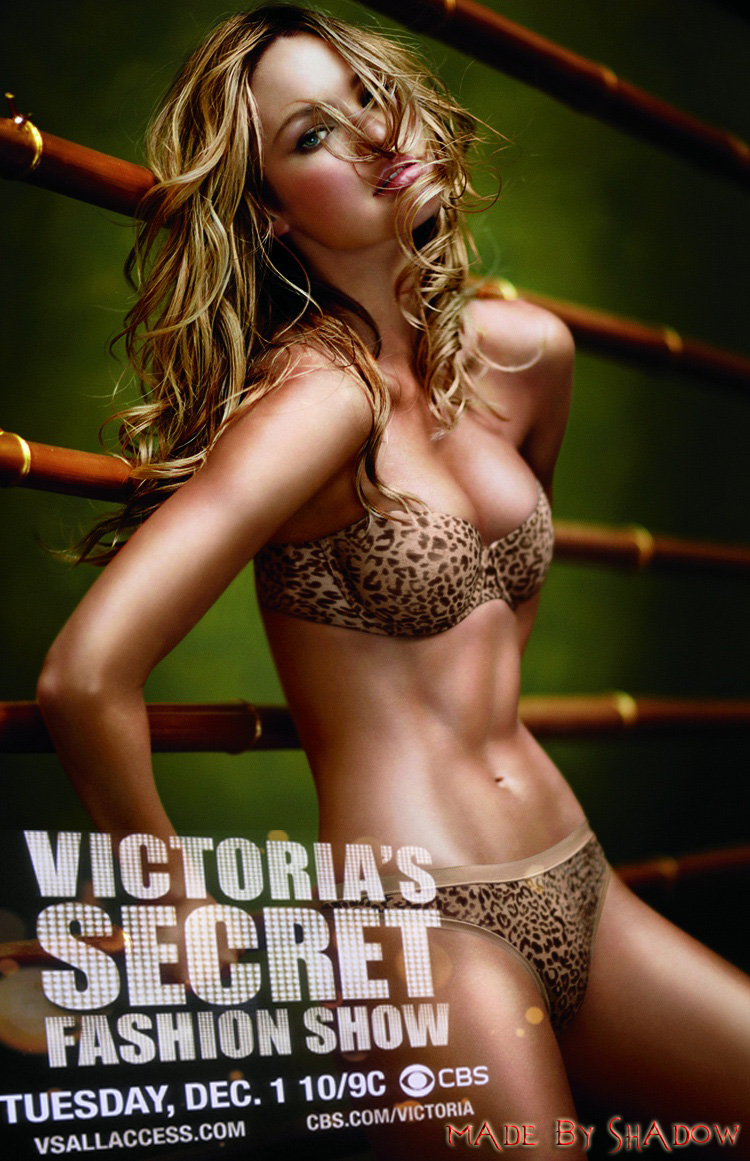
As mentioned in my immediately preceding post, Feminists generally denounced the Victoria's Secret pageants as "pornographic", "contributing to the pornographication of culture",  as containing  "sexualized female bodies", and as replete with "sexual objectification" and "sexual subjectification."  And, perhaps worst of all:  the models were much too skinny for them.

Given their attitudes towards the Victoria's Secret shows, Feminist positions regarding Miley Cyrus' rather silly performance at MTV's Video Music Awards ceremony,


and her subsequent music video called "Wrecking Ball",


have been strangely mixed, with some Feminists even defending her, primarily in response to a large number of negative comments directed at Miss Cyrus from a huge number of "news" sources.

According to Kate Dries:
...Cyrus's performance was shocking... It was jarring because...we were watching a 20-year-old woman...play the object in Thicke's sexy sex dream....While criticizing a woman for her actions might imply that she's being given an agency that has been long denied, it's not. It's holding her to a standard not required of her companion, who got to sit back and enjoy the young ass shoved in his face. Whether Cyrus was doing it somewhat ironically (she didn't exactly look sexy most of the time; the tongue wagging and pigtail buns were almost comical) doesn't seem to matter. Her lack of clothes and movements spoke stronger than anything else...

Well, that is certainly an interesting defense.  Miss Dries thinks that Miss Cyrus' dancing partner, Mr. Thicke, should be catching just as much media scrutiny as Miss Cyrus.  But, Mr. Thicke wasn't making any effort to perform any sexy dance moves at all.  And, Miss Cyrus didn't shove her buttocks in Mr. Thicke's face, but rather in his groin area.  If Miss Cyrus had simply stood there, as Mr. Thicke did, then she wouldn't have received anywhere near the attention that she did.

From Soraya Chemaly:
...Cyrus was cocky, she strutted around, she danced (really awkwardly), was brash and confident and made lewd gestures and creative use of her tongue.  In addition, she, like her male peers, sexually and racially objectified other women who were onstage with her, almost all of whom were black — and she has come in for deserved criticism for this.  Cyrus has recently been the topic of conversations regarding race and cultural appropriation and ratchet culture, and last night further contributed to the debate.  But, Cyrus, as other women performers do, also embodies the sexualization that can be so problematic.  She acted like a man, objectified herself and other women, and appropriated several racial cultural signifiers...
...Girls and women who too brazenly display power, and are unself-conscious or unapologetic about it, disturb people. When famous women get too big for their, admittedly sometimes really small, britches, our culture likes to make sure that what’s inside that often “pretty head” is seen as crazy...
...Last night’s performance brought the public’s perception of Cyrus one step closer to the “crazy” narrative — the casually misogynistic, “OMG, quick, look at another crazy, fucked up, slutty girl go down.” It’s often a white girl, because they’re more commonly featured in our dominantly white cultural narrative. But black female performers are criticized too, sometimes in racialized ways...
...The shame-filled objections to women like these are simply a double standard about power and worthiness.  The outrage and “disappointment,” cloaked primarily in concerns about, “sluttiness,” “selfishness,” “craziness” and “inappropriateness,” add up to one thing: female unworthiness.
Women, we’d like everyone to keep thinking, are unworthy of too much agency, authority, power and self-expression. Otherwise, everyday people would be decrying every top-billed male performer for engaging in the exact same behavior that Cyrus did last night....Miley Cyrus deserves critique for the racially objectifying elements of her performance, and even for the production of an artistically questionable, odd and distasteful set involving bears and bad dancing. But Cyrus is most likely be criticized instead for being “slutty”or ”crazy” — and those words matter and speak volumes....

The terms "Sexually objectifying herself" and "sexually objectifying other women" are standard terms that form the basis of a fairly typical Feminist attack.  Stating that Miss Cyrus "acted like a man" is quite a strong accusation, particularly when hurled from a Feminist.  I once heard a man from South America condescendingly describe American women as basically "men with tits."  Now, even our Feminists are insulting other women by charging them with "acting like a man."  Contrary to what Miss Chemaly asserts, I'm sure that I've never seen a man perform as Miss Cyrus did.  "Slutty" and "crazy" were what Miss Cyrus was obviously going for. Even Thailand's notorious lady-boys are considerably more demure.


Miss Cyrus was clearly seeking to emulate fellow former-Disney stars Britney Stars and Cristina Aguilera,


and similarly raked in the fame and fortune.

Miss Chimaly's indictments that Miss Cyrus "racially objectified" other women, and that she committed "cultural appropriation", may represent some new terms for the Femosphere.  I hadn't heard these particular forms of inculpation previously used. 

And, while other Feminists were busy accusing various "news" sources of "slut-shaming" Miss Cyrus, Ninja Cate criticized the White Feminists for "ignoring the racial implications of what she did."
...can we talk about the problematic and racist nature of her performance? Her literal use of people as props? Her association of her newfound sexuality with the traditional codifiers of black female culture, thereby perpetuating the Jezebel stereotype that black women are lewd, lascivious and uncontrollably sexualized? Can we talk about the straight up minstrelsy of that performance? Can we talk about how not a single black person won an award last night even though the people who did win awards have been mining black music and culture for years?...
...See the problem isn't that they talked about slut shaming. That deserves attention. The problem is that they completely sidestepped the other glaring teddy bear in the room, and that is the commodification of black female sexuality in Miley's performance. But it's not a thing that white women deal with, so it didn't warrant inclusion or discussion by a largely white-led mainstream feminist media. 

Well, that was pretty good.  Now, the White Feminists have been convicted of nothing less than racism.  Absolutely brilliant. 

According to Miss Cate, Miss Cyrus was "commodifying Black female sexuality" in her performance.  What the heck is that supposed to mean?  That doesn't even make any sense.  Wasn't she supposed to hire any Black back-up dancers?  The back-up dancers weren't dancing nearly as lasciviously as Miss Cyrus had rather clumsily attempted to dance.  In the words of Dodai Stewart, "in a white-centric world, putting white women quite literally in the center of the frame while women of color are off to the side is a powerful, disrespectful visual message, and it really must be said: Human beings are not  accessories."  Miss Stewart used a big word: "accessories."  So, Miss Cyrus mustn't hire any Black talent, or she is creating a "powerful, disrespectful visual image."

Regarding the sin of cultural appropriation--outside of Feminist circles, cultural appropriation isn't necessarily regarded as immoral.  Behold Australia's Chooky Dancers:


Cultural appropriation at its absolute best!  Within Feminist circles, the term "cultural appropriation" encompasses a pair of big, impressive-sounding words, so they must mean something bad.  Oh, the Chooky Dancers should be so ashamed of themselves!

Here is a brief video on the influence of African dance moves on dances in the Caribbean and Latin America.


 Miss Cyrus may have been attempting to incorporate (or to "appropriate culturally") some of these moves into her performances.  She doesn't quite seem to have the buttocks for it, and dances poorly.  So what?  Sorry, girls: stating that Miss Cyrus shouldn't attempt to dance like this because she is White and privileged is also racist.  This style of dance seems to have caught on recently in Vladivostok, which is considerably further removed from African-diaspora culture than is Miss Upper-Class Whitey Cyrus herself.


White men might not be able to jump, but these White girls from Russia's Far East (and Fraule's Dance Centre) sure can dance!  Meanwhile, over in the very Roman Catholic Philippines, the Mocha Girls sponsored a YouTube contest, with a 10,000 peso prize to the best dancer who could perform their signature Booty Shake dance to the song Bubble Butt.


See my prior post The National Organization for Women vs. Carl's Jr., where the National Organization for Women slut-shames women for entering a similar YouTube-based contest to try to appear sexy while eating hamburgers.  Oh, if our Feminists ever found out about the Mocha Girls' contest!  Just imagine how many opportunities already exist on the internet for heterosexual Patriarchs to gaze lustfully at female forms, and to "objectify" them sexually.  The Mocha Girls are only compounding this Feminist crisis. 

In Brazil, wiggling the bottom while dancing seems to represent a big part of the culture.


Arnold Schwartzenegger expressed particular appreciation for the Mulata ass.


There were some White Brazilian girls who shook their bundas quite nicely in the clip above Mr. Schartzenegger's.  I strenuously disagree with American Feminists who think that different races dancing together constitutes racism.

Shakira, who claims not to be a Feminist, made quite a sensation when she brought her Colombian/Lebanese dance moves to the United States.


I'm not aware of any complaints from the Feminists, although I wouldn't be surprised.

Regarding the female buttocks, which "twerking" and related dance styles are said to "objectify" or to "commodify" (simply choose your preferred two-dollar Feminist buzzword): the female buttocks display is a very important part of not only human sexuality, but of the sexuality of many other mammalian species.  For example: the females of the Celebes crested macaque


and of the olive baboon


signal their availability for breeding through the presentation of their enlarged buttocks.  As do human females, whose buttocks differ from those of other primates by being permanently enlarged.  The females of many primate species exhibit amplified, protruding buttocks only when they are ready for breeding; female humans and bonobos are almost always sexually available to males.  In other primate species, the males approach the females from the rear, and her swollen buttocks signal her accessibility for copulation.  Wherein lies the key to men's attraction to women's buttocks--they perpetually present the impression of being ready for him.


According to Mr. Schartzenegger, in the United States, women tend to emphasize the presentation of the breasts over the buttocks.  More than 300,000 women undergo breast enhancement surgeries in the United States each year,


and millions more wear push-up bras designed to make the breasts appear larger and perkier.  One of the great ironies of life in America is that women go to a heck of a lot of effort to draw attention to their breasts, but it is considered very bad manners for a man actually to look at them.  With their breasts, our women ostensibly seek to excite the lecherous patriarchal gaze, while simultaneously despising the majority of men whom she might catch gazing.  Which suggests that the point of the breast presentation is more about competing for status against other women, and that the male gaze is merely an annoyance.  Note that the woman in the above video has already mated and bred, and is probably (or at least in principle) not seeking any additional mating opportunities.  Asserting dominance and superiority over other women is the goal that our cosmetics industry largely serves.  Actual mating is secondary.  Starting at about 2:35 in the following clip Les Homéricains, watch the boobies of Melissa Mars expand to American proportions.


We have earned quite a reputation.  But, the emphasis that our women place on their breasts doesn't mean that the buttocks are completely ignored.  Quite the contrary.  Our women are known to fret a great deal over their buttocks.


A common concern that a typical American woman has is whether a particular article of clothing will make her buttocks appear big,


which is largely the point of American blue jeans, anyway.  As the documentary below shows, Brazil has a much more bunda-centric culture, and a woman can make a decent living off of her behind:

Even Presidents enjoy glancing at women's butts whenever they get a chance.


So, congratulations to Miss Cyrus, for having used her buttocks to grab so much attention.  As a species, we really are not a whole lot different from baboons, at least insofar as the visual stimuli that whet the male's reproductive interest are concerned.


What separates us from other species is the excitation of the male gaze through the art of dance.


Notice the Patriarchs in this one!


And, from Argentina's Bailando por un Sueño (their answer to our much tamer Dancing with the Stars):


The Patriarchs are certainly gazing lecherously.  You can see them when the camera focuses on the audience.  Oh, if our Feminists ever found out about these feasts for the heterosexual male eyes, then, boy would they be going ballistic.  Miley Cyrus and the Victoria's Secret pageants are quite tame by comparison, and may already be enough for them to handle.

Thursday, April 17, 2014

Feminism and the Victoria's Secret Pageant

One thing that seems to rile Feminists, at least as much as anything else, is the Victoria's Secret pageants. For example, Liz Steinborn and Ahna Kruzic wrote:

...The women in this show are unhealthily thin, unrealistically tall, and unattainably pretty; yet they typify America's standard of beauty. They are put in 12-inch stilettos that they need help to walk in, squeezed into too-small underwear, weighed down with 8-foot wings and marched out for viewing pleasure much like a plastic doll we are all pretty familiar with.

At this point, these women stop being women. Instead, they become objects of fantasy; a doll that you can dress to suit whatever your mood: Looking for a dirty tough girl? She's right here! Want to take the girl next door for a roll in the hay? She's already half-naked for you!
If we stop thinking of models as actual human beings, it's easier to watch. They are like floats in a parade – you cannot wait to see what the next one will look like.
It isn't about the underwear; you can't see it under all of the tacky costumes they wear — like the woman in the soccer ball shrug, really?
It's about setting an outrageous standard of beauty and an objectifying ideal of what is sexy.

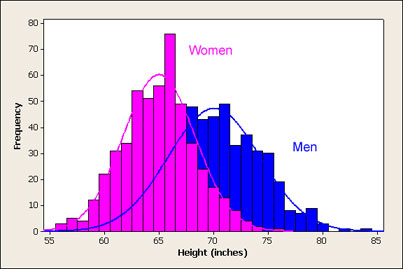
According to Jamie Utt, "Twenty years ago, models weighed 8% less than the average woman. Today, they weigh 23% less than the average woman. The average American woman is 5’4” tall and weighs 140 pounds. The average American model is 5’11” tall and weighs 117 pounds."  Here is a height chart:


Seventy-one inches is tall compared to the average height of a woman.  But, it isn't "unrealistically" tall.  These ladies aren't exactly giants.  Basketball players are tall, too.  Perhaps being tall confers some sort of advantage to a model.  The models are certainly thinner than the average American woman.  But, "unhealthily" thin?  Some people are just naturally thin, which doesn't mean that they are unhealthy.  In sooth, Victoria's Secret models are actually quite healthy.  Bill Clinton has also been on what might consider an extreme diet, but which has caused him to be especially fit and trim, in light of his age. Twenty years ago, models weighed 92% of the average American woman (which wasn't very far away), and now weigh 77% of the average American woman.  What happened?  Are models that much skinnier than they were 20 years ago?  Of course not.  We're in the midst of obesity epidemic.


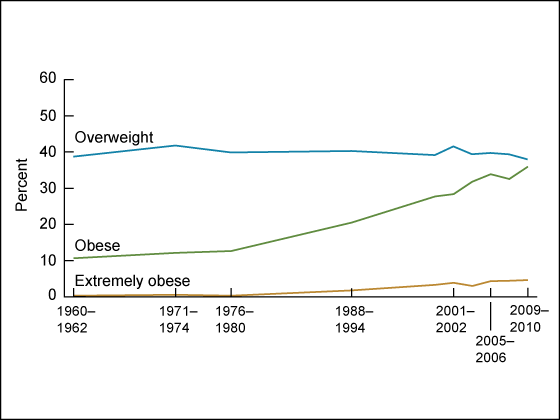
 Most American women are a heck of a lot fatter than they were 20 years ago.  The majority of us are now overweight or obese.  The average American woman may be 5’4” tall and and may weigh 140 pounds, but that's still fat.  So, exactly who is unhealthy here?  One of the salient things that a visitor to America will notice is how astonishing fat we are, particularly in the Southern states, but in other regions as well.


When it comes to obesity rates, the USA is clearly Number 1.  Mexico, however, just inches passed us in the percent of the adult population that is overweight.   


Back in the 1960s, on the popular national television show Rowan and Martin's Laugh-In, Goldie Hawn used to "objectify herself sexually" in a bikini.


Back then, fewer women were overweight, and I doubt that a whole lot of Feminists got overly distraught over this skinny bitch's  "overtly-sexual" display.  This "slut" was certainly shooting for the patriarchal gaze, which undoubtedly succeeded in catapulting Miss Hawn's career as an actress.  Watching a Victoria's Secret Fashion Show is a bit like being transported back in time, to see female figures that were actually fairly commonplace 40 years ago.


 Jamie Utt writes that the Victoria's Secret Fashion Show "is in no way reflective of the “womanliness” I know and value. The women in my life don’t look like the women in this parade."  I don't doubt him for a second.  "The women in this parade project, by in large, unhealthy body standards, and they project onto women everywhere a tiny box of beauty into which the show says, 'You must fit.'”  I suspect that these skinny bitches are probably a lot healthier than a lot of other women.  And, who says that any woman absolutely has to fit into any sort of "box of beauty?"  Anyone who doesn't like the show certainly isn't obliged to watch it.

Lexie and Lindsay Kite obviously loathe the pageant, and make their point with an abundance of Feminist buzzwords, which make the passion impossible to miss, but the logic somewhat difficult to follow:
Due to Victoria’s Secret’s ubiquitous media presence and radical transformation from a modest, Victorian-era boutique to a sexed-up pop-culture phenomenon in the last decade, a critical look at VS’s media texts is now more warranted than ever. Sexual objectification is in no way subtle here – it is central to VS’s varied promotions and operates at the forefront of the texts.  Thus, my purpose in my work is not to assess the level of blatant sexual objectification or inherent “male gaze” within VS’s advertisements, but to illustrate how Victoria’s Secret teaches and normalizes self-objectification and normalized pornography as desirable, self chosen, and empowering.
Where once sexualized representations of women in the media presented them as passive, mute objects of an assumed male gaze, today women are presented as active, desiring sexual subjects who choose to present themselves in an objectified manner because it suits their “liberated” interests to do so.  I argue VS advertising adds a further layer of oppression. The brand’s official slogan is “We are redefining what it means to be sought-after,” and in this regard, the company is not exaggerating.  Not only are women objectified as they have been, but through sexual subjectification, they must also now understand their own objectification as pleasurable and self-chosen...
Further, if we take “pornography” as referring to a state of undress as well as a mode of representation that invites the sexualized gaze of the viewer, VS effectively contributes to the “pornographication of culture” – or the normalized state of porn in our society.  In an era when girls and women learn to treat and experience their bodies as sexual objects from a young age, VS’s nearly inescapable media messages render it not only likely but normal for females to engage in self-objectification as self-chosen and empowering.
A close analysis of the chain’s advertising is necessary, especially due to studies that demonstrate repeated exposure to sexualized female bodies encourages women to self-objectify, positively endorse sexually objectifying images and experience body hatred....
...The accompanying self-subjectification, endorsement of sexually objectifying images, and body hatred proved to go hand-in-hand with such “bold, sexy, powerful” ideals – though ideal for an industry raking in $5 billion a year and expanding across the globe – is not conducive to real progress as individuals or as a culture. Feminist values include self-definition, control over one’s body and personal freedom...and VS represents a severe distortion of feminism – a faux form of power – proclaiming women can have it all if they can be it all. When the desire only to be desired is a woman’s primary objective, she loses herself, her control, and her freedom.
In the case of Victoria’s Secret, a push-up bra and thigh-high boots are made to stand for“empowerment” in a way that objectifies feminism and femininity simultaneously through its commodification of the female form...We can fight back!
The Kite sisters consider the show to feature "sexualized female bodies", and to be replete with both "sexual objectification" and "sexual subjectification",  which incites (obviously) the "sexualized male gaze", and thus amounts to "pornography" which contributes to the "pornographication of culture."  The pageant also causes female viewers to "self-objectify", to "self-subjectify",  and to spend far too much money on Victoria's Secret products.  Previously, a lot of Feminists complained about "sexual objectification" in art, and the male (or patriarchal) gaze that the work aroused.  Now, the women are simultaneously "objectified" and "subjectified", which is now doubly bad, even if self-chosen on the part of the model. The Kite sisters are out-doing Andrea Dworkin, who stated that, in using the term objectified, "we hope that people will think that we are very smart when we use a long word."  And, the Kite sisters probably consider themselves to be even smarter for using that and other long words. 

The Kite sisters consider the Victoria's Secret Fashion Show to be "pornographic", and believe that the show causes women to hate themselves.  Feminists are certainly known for using a bit of hyperbole when asserting a point.  Anyone who doesn't like the show certainly doesn't have to watch it, and I think that the show mostly appeals to women, anyway.

It is undoubtedly a very good thing that, our educational system being what it is, our Feminists have never bothered to learn Spanish, and never switched the channel to any of the Spanish-language television channels.  Otherwise, if our Feminists had ever found out about the Miss Reef contests


or even Sábado Gigante's Miss Colita


then, boy would our Feminists have gone berserk.  To characterize these shows as "pornographic", "contributing to the pornographication of culture",  as containing  "sexualized female bodies", and as replete with "sexual objectification" and "sexual subjectification" just wouldn't be enough.  The Feminists would have to invent some new buzzwords to express their outrage.  The lecherous "sexualized patriarchal male gaze" would be stimulated in all but the queerest of male gazers.  Any Feminist who happened, by chance, to view any of these Spanish-language pageants would certainly fall into a swoon and faint.  The Feminist's delicate constitution would be just too weak to handle it.

Even ordinary Spanish-language shows, like Univision's Caliente, would be far too sexy for our Feminists to handle.


And, actually touching a woman's butt on a television show:


If this had occurred on an Anglophone television program, then it would have been a major news item for months on end.  Feminists would have labeled the assailant a "rapist", succeeded in ending his career with the network, and campaigned for his prosecution and imprisonment.

Another Feminist wrote:

I NEED FEMINISM BECAUSE OF THE VICTORIA'S SECRET FASHION SHOW
 ...this annual penis happy show happened last night.  I have so much to say about this show that I don’t even know what to say.
 Oh yay! There are helllaaaa almost naked, unrealistically thin, and beautiful women walking the stage dressed up as sexy angels. Who couldn’t love this?!
 ME.
 This.shit.is.disgusting.
 Did you know the size of the average woman is 14. The average size of a model is 2. See any gross disparity here?
 The Victoria’s Secret Fashion Show, along with other models and runways, show just how obsessed we are with being thin and beautiful. It’s those shows that tell us that if you are fat, or even normal, it’s not good enough. Being thin isn’t good enough though! When I asked my roommate what she thought about the VS Fashion Show, this is what I got:
 "Not only are they thin, but they’re thin with big boobs and a butt. And they’re perfectly toned and have fantastic sex hair and even have wings because they can fly and because red bull gives you wings"
 So, you have to be thin, but have big boobs. Oh, and an ass. Oh, and you must have some muscle tone (unless you’re just a high fashion runway model, then ribcage showing is a MUST). Your hair must look like you’ve just been fucked BUT you must also look unattainable at the same time. And, wings…really? Did you know that angels looked like playboy models back in the Jesus days? Yeah I didn’t know that either.
 The Victoria’s Secret Fashion show gives both men and women (you have no idea how many men watch the show to just stare at the women..cough*objectification of women*cough*male gaze*cough*gross*cough) a shit idea on what women’s bodies are supposed to look like.
image

^These are not real, normal, everyday women.
image

^ These are…and they’re pretttyyyyy hot by the way…
The sad thing is, most people don’t see the beauty in the last picture when it’s compared to the models’ photo. When I look at the top photo, all I see is thin women with fake tits. When I look at the bottom photo, I see women with goals and aspirations; women who are strong and independent; women who have amazingly beautiful personalities; women who know how to rock their bodies. 
People wonder why we live in a fad-diet society. It’s because we’re told that we need to look like Victoria’s Secret’s model to even be slightly beautiful. These unrealistic beauty standards are so incredibly detrimental to both men and women. Why do we have eating disorders? Because women feel that they need to be stick thin. Why do women wear pounds and pounds of makeup? Because we are always being told that we aren’t pretty enough. (have you ever noticed that there are aisles and aisles of makeup and hair accessories for women and like one aisle for men? Shouldn’t that be a sign?) We are always being told we aren’t good enough…that we need to try harder. The sad thing is that even when these models aren’t wearing makeup, they’re constantly being hounded for looking uglier than normal. Society’s idea of what is beautiful is entirely fucked up. When I lived in Australia, I never felt the same amount of pressure about wearing makeup as I do here in the states. What the actual fuck? Why are we so obsessed with makeup and hair products and diets and weight?... 
Contrary to what this lady says, I think that the Victoria's Secret Fashion Show actually attracts more female than male viewers.  Hence, the models are getting more of a female than a male gaze.  And, yes, we know that the bulk of American women are a heck of a lot fatter than Victoria's Secret models.   Size 14 may be the average size of the American female, but that is still quite hefty, by both historic and international standards.
Although a lot of Feminists seem to think that the Victoria's Secret pageants cause women to have eating disorders, hospitalizations for eating disorders have actually plunged lately.  Obesity-related hospitalizations have been soaring.  Maybe these pageants are making women too fat instead of too skinny?
As for the boobs: well, I suspect that most of the models are misrepresenting the actual size with the help of Victoria's Secret push-up bras.  We never get to see them topless, do we?  Their buttocks, on the other hand, are certainly quite lovely to behold.  Who wouldn't welcome the chance to get his hands on a pair?  However, one problem that I think that the pageant may have with male viewers is that the models all look pretty much the same, like so many Barbie dolls.
There are some variations in hair color and skin tone, but their body shapes are almost identical.  Taylor Swift fits right in with them.  Men typically like to have a bit of variety, particularly when is comes to visual stimulus, and may find themselves bored as the impact of the stimulus wanes within about 10 minutes of the start of the pageant.  A lot of gents would probably prefer watching Brazil's Miss Bumbum contest.
 
This pageant features quite a lot more variety in the sizes and shapes of the participants.  With the Victoria's Secret pageants, once you've seen one model, you've pretty much seen them all.  You get saturated fairly quickly.  With the Bumbum contest, the patriarchal male gaze remains intense throughout, because each chick looks different.  As Arnold Schwartzenegger says,
 
 "After watching the Mulatas shake it, I can absolutely understand why Brazil is totally devoted to my favorite body part: the ass."
Given that Gloria Gloria Steinem herself is reportedly "cool" with the Victoria's Secret pageants, I don't know what the Feminists expect the National Organization for Women to do about it.  What I think they should do, rather than pressure Victoria's Secret to close down or modify its pageants, is for the National Organization for Woman to put on its own pageant, featuring a variety of body types that they think are beautiful, so that the patriarchal male gaze can gaze upon them, and maybe more women will be happy with their appearance.
 
Brazilians appreciate women in different shapes and sizes, and I think that Americans also have the potential.   However, we are getting to be much too fat.  The men are getting fat, too, even though we don't get overly upset about it.
 
The above Feminist ended her blog entry with "So I leave you with a challenge…I want you to own your body and own your beauty. Nobody is ugly."  I'll leave you with another challenge.  Stop drinking those stupid American soda-pops.  Things go a heck of a lot better without Coke.  Stop eating French fries.  Stop eating the overly-processed garbage and junk food.  No more donuts.  Eat more fresh fruits and vegetables.  And, turn off the damned computer for a while, and go out and get a little exercise.  And, for the gents, until the National Organization gets it act together and starts offering its own pageants, if you want, take a little trip to Brazil and take in dem asses for yourself!


Wednesday, April 16, 2014

The National Organization for Women vs. Carl's Jr.

From the National Organization for Women's website:


Apparently, Not More Than Just a Piece of Meat

Offender: Carl’s Jr.
Media Outlet: Online video competition open to the public
The Offense: Fast-food chain Carl’s Jr. is currently holding a contest entitled “Hot Chicks Eating Burgers,” which promises a grand prize of $1,000, an all-expense paid trip to Las Vegas, and a chance to be in an upcoming commercial for the hottest chick eating a burger.VAW 2009 Hall of Shame
NOW’s Analysis: The fast food industry seems increasingly determined to use the hypersexualization of women as an avenue to peddle their bargain burgers. In the tradition of its previous commercials featuring Paris Hilton and Padma Lakshmi eating burgers in outrageously sexy ways, Carl’s Jr. has launched the “Hot Chicks Eating Burgers” contest. The webpage for the contest touts two videos: The first is a minute long segment of a woman sensually consuming a burger, whose actions range from inviting looks at the camera to deliberately sucking a slice of pineapple from the sandwich. The second is the most recent famous “hottie” endorsing Carl’s Jr., Audrina Patridge, eating a burger while on the beach in a bikini. Once that video ends, the famous Carl’s Jr. tagline, “More than just a piece of meat,” appears with overwhelming irony above a link which reads “Click here to see more of Audrina being hot.”
This form of advertising is particularly dangerous, since not only does it encourage the objectification of women within the media realm, but it actively seeks to cultivate self-objectification in the average woman. By issuing this contest, Carl’s Jr. actually pits women against one another to see who can be the most provocative, sensual, sexual object possible, all to the end of selling burgers.
Take Action: Tell Carl’s Jr. and Hardee’s, the two sponsors of “Hot Chicks Eating Burgers,” what you think of their “contest.”
---------------------------------
Well, that is certainly interesting.  Here is Padma Lakshmi.
 
Miss Lakshmi is quite a lovely-looking lady.  But, eating a burger in an "outrageously sexy way?"  Feminists are known for deploying hyperbole, particularly against sexy women.  But, just how Puritanical are the ladies at the National Organization for Women?  Can't a pretty girl even sit on a stairway and eat a sandwich, without the witches at the National Organization for Women accusing her of hypersexual witchcraft? 
Here is Paris Hilton.
 
Miss Hilton just looks silly--she is trying much too hard to look sexy, and no-one is going to eat a hamburger while washing a car.  Miss Hilton seems to be seeking to emulate Jessica Simpson...
 
but not quite achieving success.  Her is Audrina Patridge's contribution.
 
So, Feminist don't approve of Bikinis. It wasn't that terrible. Moreover, these ladies aren't exactly meeting Alice Kaufman's criterion of being "passive objects", in that they are actively eating hamburgers. Some will no doubt succeed in receiving active male gazes, as that may have been what they were going for. But, that doesn't make them bad.

 These may be entries from some of the hyper-sexualized "sluts" who participated in the "Hot Chicks Eating Burgers" contest, which pitted "women against one another to see who can be the most provocative, sensual, sexual object possible."


According to the National Organization for Women, what these "sluts" are doing is "particularly dangerous, since not only does it encourage the objectification of women within the media realm, but it actively seeks to cultivate self-objectification in the average woman." Aren't women entitled to have a bit of fun, and to flaunt their natural assets, if they wish?  Certainly no-one is under any obligation to "self-objectify."  Perhaps their greatest danger, assuming no ill health effects from the hamburgers themselves, is potentially being chased by a mob of angry Puritanical Feminists, for seeming to invite the Patriarchal gaze.
 

Tuesday, April 15, 2014

Sexual Objectification in Art

"Art is the objectification of feeling" is a famous quotation attributed to Herman Melville.  In her book Mind: an Essay on Human Feeling, Susanne Langer added "Art is the objectification of feeling, and the subjectification of nature."

As Peter St. Andre puts it:
...in art, human abstractions are objectified or concretized at the sensory level through the rearrangement of human perceptual impressions into clear, intelligible images. In this way, an aesthetic image performs the same function that a word does in the realm of logic: it reduces or condenses a vast sum of knowledge and information to a single cognitive unit....
 ...works of art are entities of a special kind: they are sensuous embodiments (as opposed to conceptual explications) of the creator's thoughts and values about certain aspects of reality. The primary purpose of creating a work of art is the objectification or concretization of those abstractions in the form of perceptually available concrete entities (which makes it possible to contemplate or experience those abstractions in concrete reality)....
 ...Thus the following working definition: "Art is the sensuous embodiment of the creator's thoughts and values about certain aspects of reality, effected by creating a perceptually available concrete entity that is fundamentally similar to but selectively different from actual reality, and created primarily for the purpose of objectifying and therefore being able to contemplatively experience the kind of world the artist fundamentally values."...
...A painting is a sensuous embodiment of a painter's thoughts and values about landscapes, physical objects, animals, or human beings, effected through the use of color on a two-dimensional surface to selectively represent those entities, and created primarily for the purpose of objectifying and contemplatively experiencing the kind of natural or human world the painter fundamentally values....
In the arts, the artist is objectifying (through the process of sensuous embodiment) his own thoughts and values about certain aspects of reality, so that the beholder (or audience) will have a contemplative experience of the kind of world that the artist values (in Mr. St Andre's opinion), or perhaps a contemplative experience of a different plane of reality or abstraction.

Many Feminists have decried what they call "sexual objectification" in art.  For example, Brian Willard writes "Design Cloud’s current exhibition Objectify This, curated by Vanessa Ruiz, displays a concentrated emphasis on the feminine body (specifically female anatomy) to issue a pointed, yet refined overview of how women have been reduced to pieces of meat in art and since have transcended the confines of these patriarchal structures."

In her essay Undoing the Patriarchy in Art, Alice Kaufman states that "the topic of women in painting and sculpture has traditionally been that of a passive object, the receiver of an active male gaze.  Objectification of women in art is first a reflection, and then a continuation of female objectification in society."

And, regarding the art exhibited in the Metropolitan Museum of Art, Carol Duncan complains that "museums are prestigious and powerful engines of ideology...the collection's recurrent images of sexualized female bodies actively masculinize the museum as a social environment." As the Guerrilla Girls have pointed out,


the vast majority of artists whose work appears in major museums are male, and most of the works that depict nude humans have nude females as their subject (or object, if you prefer).

From a recent essay by an anonymous author:
...Are representations of women in art and film in the history of western civilisation and contemporary society designed for the heterosexual male gaze and their need to evade sexual responsibility so they can divert from their own sexual inadequacies?...
..Laura Mulvey says that some representations of women in historical paintings make men active in the patriarchal gaze and women passive as the women are being observed by men in various ways. Her theory suggests that the male gaze projects his own fantasy onto the female figure making the gaze purely for the man’s desire which removes the humanity from the woman, and objectifies her...
Sexual objectification has always been an important aspect of art.  There is no point in denying it.  As Richard Mason put it in The World of Suzie Wong:
The creative impulse had its roots in sexuality, and it was no more chance that I enjoyed painting Malay women than that other artists enjoyed painting nudes.  (For any painter who claimed that the female body only interested him in "abstract form" was talking rubbish--he might as well paint pillows.)  They aroused in me feelings which, denied direct expression, had found expression in another form, and which gave my pictures whatever merit they might possess;  such feelings as Stella had never aroused.  And of course she had known it.  "If he paints Malay women and not me, he can't love me," had been her instinctive reaction, and I had thought the argument unsubtle, only proving her abysmal ignorance of the higher motives of art.  But, of course she had been right.  I had never loved her--never for a moment.
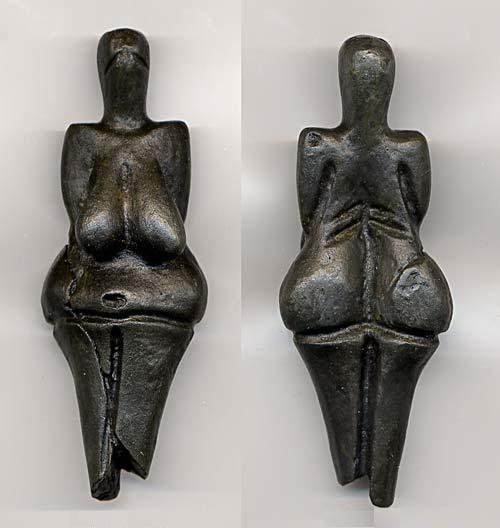
Our Paleolithic ancestors created numerous depictions of women (often called "Venuses") with emphasized sexual characteristics: vulvae, breasts, stomachs and buttocks. 


Some scholars, such as Maria Gimbutas, saw these figurines as evidence for a Paleolithic Eath-Mother Goddess.  Other Scientists, such as Karel Absolon, considered the statuettes  as stone-age erotica. Commenting upon the Venus of Dolní Věstonice,


Mr Absolon wrote: "This statuette shows us that the artist has neglected all that did not interest him, stressing his sexual libido only where the breasts are concerned - a diluvial plastic pornography."  The oversized buttocks and breasts common to many of the pieces could be interpreted as fanciful wish fulfillment on the part of pre-historic male artists. One can only speculate on what Paleolithic Feminists might have thought of the sexual objectification and the patriarchal male gaze.  Perhaps some Paleolithic women were made to feel bad if the size of their breasts and buttocks departed substantially from the largely-unattainable standard of female beauty established by the Venus figurines.

Art that may be regarded as sexually objectifying, obscene, and offensive to women also appeared in Ancient Egypt.  Below is a documentary film on the Turin Erotic Papyrus.


The Turin Erotic Papyrus features various images such as these:


Perhaps the best known sexually-objectifying sculpture that incites the patriarchal gaze is Alexandros of Antioch's Aphrodite of Milos, popularly known as the Venus de Milo,

and the Venus de Medici, both from ancient Greece.


The ancient Greeks seem to have specialized a fair amount in homoerotic art,


which some of our Feminists might enjoy gazing upon.

Temples, caves, and holy sites in pre-British India often featured sexually-objectifying images.


Very plump, nubile breasts there, and quite imaginative and varied positions.

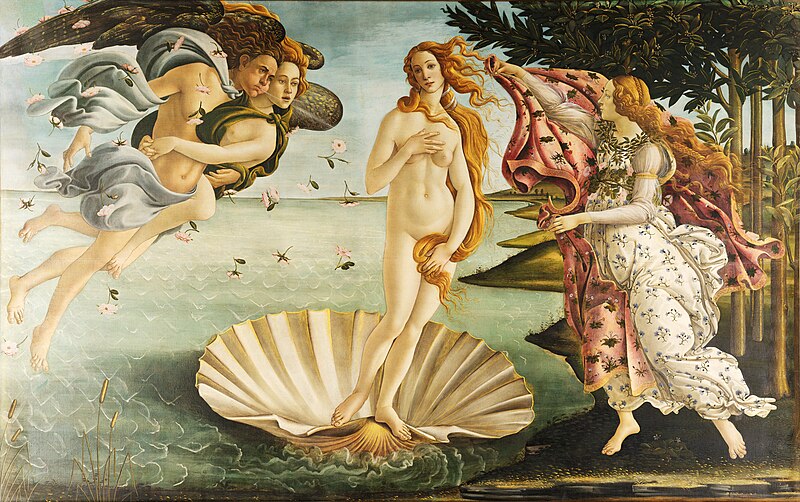
The monumental female nude finally made a return to Western art in 1486 with Sandro Botticelli's The Birth of Venus.


The Baroque Era's Peter Paul Rubens gave us some flabbier nude women to objectify.  I don't think that we've seen anything quite like it since the Paleolithic era.  When is comes to objectification, clearly, à chacun son gout.


Pablo Picasso


gave the world some rather fanciful nude images of women.  According to Kenneth Clark, "No nude, however abstract, should fail to arouse in the spectator some vestige of erotic feeling, even though it be only the faintest shadow. And if it does not do so it is bad art and false morals. The desire to grasp and be united with another human body is so fundamental a part of our nature that our judgment of what is known as ‘pure form’ is influenced by it, and one of the difficulties of the nude as a subject for art is that these instincts can’t lie hidden."  Well, I suppose that some of Mr. Picasso's paintings do arouse some vestige of erotic feeling, even if we wouldn't necessarily want to grasp and be unified with his subjects. Although some Feminists might not like his paintings of women, particularly in light of the fact that the Mr. Picasso's work often focuses on lady bits separated from their persons, it turns out that Mr. Picasso was, in fact, a Feminist of sorts.

One of my favorite painters of naked women was Paul Gauguin.


While his paintings certainly create a very false impression of the reality of life in French Polynesia, they obviously do not fail to arouse erotic feeling.  As Bobbi Wilson states: "I don't care what y'all think; I've been contemplating Gauguin's nudes for years and I still like 'em."

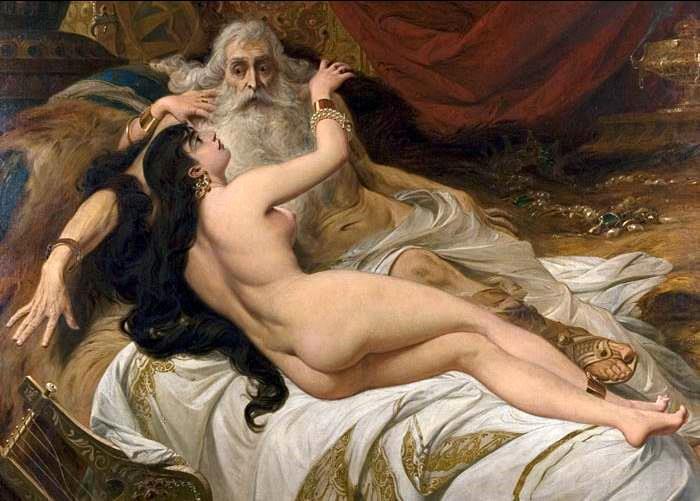
And, here is Pedro Américo's King David and Abishag.


Mr. Américo was Brazilian, so of course his Abishag is going to have the phat bundas.

Here is art historian John Berger's perspective:

Men dream of women. Women dream of themselves being dreamt of.  Men look at women.  Women watch themselves being looked at....
 ...From earliest childhood she is taught and persuaded to survey herself continually.  She has to survey everything she is, and everything she does, because how she appears to others, and particularly how she appears to men, is of crucial importance, for it is normally thought of as the success of her life...
...A woman, in the culture of privileged Europeans, is first and foremost a sight to be looked at.  What kind of sight is revealed in the average European oil painting.  There were portraits of women as there were portraits of men.  But in one category of painting, women were the principal, ever occurring subject.  That category was the nude.  In the nudes of European painting, we can discover some of the criteria and conventions by which women were judged.  We can see how women were seen. 
What, then, is a nude?  In his book on the nude, Kenneth Clark says that being naked is simply being without clothes.  The nude, according to him, is a form of art.  I would put it differently.  To be naked is to be oneself.  To be nude is to be seen naked by others, and yet not recognized for oneself.  A nude has to be seen as an object in order to be a nude. 
In the European oil painting, nakedness is not taken for granted, as in archaic art.  Nakedness is a sight for those who are dressed....   
Part 2:
The convention of not painting the hair on a woman's body helps toward the same end.  Hair is associated with sexual power.  With passion.  The woman's sexual passion needs to be minimized, so that the spectator may feel that he has the monopoly on such passion.      
In conclusion, let's enjoy this clip that features the scrumptious Emmanuelle Béart in La Belle Noiseuse.


The movie itself is nearly four hours long, and well worth it.